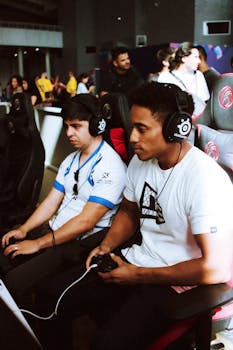
A teen enjoying a retro video game with a classic controller in a relaxed indoor setting.

Historic Game Releases That Changed the Industry Forever

Historic Game Releases That Changed the Industry Forever

You remember your first time seeing a new game mechanic and realizing the rules had just changed. That’s the power of historic game releases in action, shaking up expectations overnight.

Games that hit at the right time don’t just sell millions—they change how everyone builds, plays, and talks about video games. Their influence can be traced through genre, competition, and community culture.

Journey through these historic game releases to see concrete moments when the gaming industry turned a corner. Each example offers an actionable lesson for players and designers who want to stay ahead.

Gaming Industry Milestones That Changed Video Games

Recognize five essential lessons these historic game releases have taught developers and players. Each one brings a step-by-step change you can track.

The real shift happens not only from publicity but from observable changes in design and community behavior following a big reveal or breakthrough mechanic.

Concrete Shifts in Player Behavior

Players who tried Super Mario Bros. adopted ‘run-jump-repeat’ because winning required experimentation. Success meant memorizing patterns visibly—the core of action platformers to this day.

Legend of Zelda asked you to explore without a map, so players drew their own in real notebooks. Friends gathered and exchanged hints as word-of-mouth guides.

With Sonic the Hedgehog, the industry saw speed become a design pillar. Competitors now rushed to create mascots representing agility, not just strength or endurance.

Stepwise Industry Evolution

Tetris proved one simple rule: one mechanic, polished, can become essential. Its falling blocks kept players in flow, leading to decades of ‘one more try’ experiences.

Street Fighter II set a new baseline for multiplayer competition with combos and reversals. Arcades became arenas, influencing the structure and scoring of future fighting games.

Doom’s fast, first-person action made ‘mouse-look’ the default. Once players learned quick aiming in three dimensions, shooters evolved faster and demanded more precise skills.

Game Release Year Genre Impacted Takeaway for Players
Super Mario Bros. 1985 Platformer Practice run-jump patterns to enhance reflexes
The Legend of Zelda 1986 Action-Adventure Create your own maps & notes for exploration
Tetris 1984 Puzzle Focus on mastering small systems for big results
Street Fighter II 1991 Fighting Learn advanced combos and timing for competition
Doom 1993 First-Person Shooter Use mouse controls for precise movement

Breakthrough Game Mechanics That Influenced Modern Design

To integrate new ideas from historic game releases, observe their design choices and copy what works. Use these examples as a checklist for evaluating any game’s mechanics.

Try applying one takeaway at a time: start with visible interaction cues, then test how players adapt their habits in real time.

Actionable Checklist for Designers

List the mechanic you notice first: it might be Tetris’s cascading blocks or Zelda’s item-based progression. Write down what the player must do differently compared to the last title they played.

If a game like Half-Life teaches narrative through the environment, describe which features tell the story—a phone call, radio chatter, graffiti, or environmental art.

  • Test guided exploration by blocking or unblocking routes; watch if players experiment.
  • Add physics-based puzzles to encourage experimentation; track how players discuss strategies.
  • Introduce limited resources; check if players trade or save more actions as a result.
  • Remove traditional scoring for open-ended play; observe how players set new goals.
  • Prompt social interaction—voice chat, emotes, or trading items—to see communities form distinct roles.

Each mechanic shifts not just what players do but how they think about their next move. Use these rules as a way to spot the next historic game release.

Mini Scenario: Persona Adopts a Social System

After Persona 3, fans started scheduling game events like real-world calendars. “I have to meet Yukari at five before studying,” one player says, mimicking a regular school day routine.

The addition of time management made balancing relationships just as tense as boss fights. Players learned to optimize their in-game days using actual planners.

Ever since, social simulation mechanics have become foundational in RPGs, influencing how stories branch and decisions build trust. Copy this pattern: make time management matter as much as direct action.

  • Organize your playtime: plan which missions to tackle next for long-term rewards.
  • Prioritize character interactions to unlock optional stories and bonuses.
  • Experiment with in-game schedules and note which habits lead to better outcomes.
  • Document surprising event outcomes to share tips with others.
  • Rotate between main story and free exploration for a complete game experience.

Each step helps you adopt proven strategies from historic game releases into your gaming approach and design work alike.

Memorable Gaming Moments That Shaped Player Culture

Witnessing transformative moments in gaming, like unexpected twists or community-wide discoveries, deepens your understanding of historic game releases’ influence.

Social bonds grow stronger when iconic moments are replayed or discussed, giving players a lasting connection to their favorite franchises.

Dynamic Discoveries and Shared Triumphs

Elite raids and surprise events, such as Pokémon Red and Blue’s missingno glitch, pushed players to share findings, notes, and strategies in real time, forming unique bonds over shared success and surprise.

The first ‘You Died’ in Dark Souls didn’t just challenge a player, it sparked thousands of guides. Players used precise wording: “Dodge, don’t block here,” turning tough moments into teachable scripts.

The arrival of Halo’s LAN parties changed peer-to-peer play forever. Organizers set up living rooms with Network cables, snacks, and timers, echoing real sports tournaments outside the digital arena.

Concrete Impact on Language and Behavior

“All your base are belong to us” from Zero Wing created a language meme, prompting real-life catchphrases and playful debate. Culture shifted as new lingo was tied to experience.

Speedrun communities, pushed by Metroid and Mario 64, popularized real-world speed timing. Streamers physically timed attempts on split clocks, narrating their decisions for guidance.

Esports phrases like “gg” or “rush B” are repeated both online and face-to-face after tough matches, demonstrating the permeation of gaming culture into everyday speech.

Iconic Game Worlds That Players Still Explore

Explore legendary spaces from historic game releases to understand how environmental design invites players to return, discover, and share years after debut.

Step inside these worlds to notice unique maps, hidden paths, and evolving player communities who continue to uncover secrets together—years after release.

Scenario: The Open World Rulebook

Skyrim rewrote how players interact with digital landscapes. When someone says, “I’m still finding new caves 200 hours in,” it’s a real routine, not a marketing line.

Minecraft’s infinite landscapes ask players to build, explore, and chart their creations. Coordination—“Let’s meet at the mountain base”—becomes a part of daily play, fostering real teamwork skills.

Players travel in groups or solo, but always mark coordinates, share maps, and send tips. Each session feels like planning a group hike: preparation, exploration, debrief.

Tabletop and Digital Analogies

Just as Dungeons & Dragons relies on the DM’s world, Zelda and Elden Ring rely on environmental cues—weather, music, or distant landmarks—as signs to prompt player action.

Mapping digital worlds feels like jotting down D&D notes: “Dragon spotted east canyon.” Everyone builds their own legend, acted out through daily play routines or forum discussions.

Adopt this technique: whenever entering a new game world, take your own notes or screenshots. Use these as story starters with friends online or during gatherings.

Influential Game Developers Who Shaped Gaming History

Learning from influential creators behind historic game releases lets you spot patterns to try in your projects or recognize in upcoming titles you play.

By following development stories, you trace which techniques and philosophies sparked broad shifts in design—practical for gamers, streamers, and designers alike.

Process Breakdown: Step Inside a Developer’s Mind

Shigeru Miyamoto’s approach: “Start with movement, add purpose.” Super Mario Bros. began as controlling a sprite, and only later added challenges, secrets, or progression.

Sid Meier launches with: “A game is a series of interesting choices.” Civilization turned each button into a chance to plan, debate, or experiment.

Ken Levine and the Bioshock team made players’ values visible through choice-driven scripts, resulting in: “Will you harvest or save?” This prompted reflection on game morality and consequences.

Concrete Practices to Try

Start designing by creating a single, repeatable fun action. Test if friends want to play longer. Observe body language: are they leaning in or glancing away?

Solicit specific feedback on pacing. Ask: “Was there a moment you paused unexpectedly?” Document and adjust accordingly, borrowing the playtesting culture from these historic game releases.

Draft gamer-friendly instructions that blend challenge with direction: “Try dodging left on boss phase two.” Direct, actionable scripts help our community thrive.

Legendary Multiplayer Experiences That Defined Online Play

Experiencing multiplayer milestones in historic game releases builds skills beyond reflexes—learn teamwork, communication, and strategy that carries into real-world teamwork and leadership.

Coordinate with others to grasp both winning tactics and group decision-making. Online lobbies set the stage for friends, rivals, and alliances that impact how you engage.

Seasonal Events and Group Rituals

World of Warcraft’s in-game holidays created calendars for players: you’d hear, “Let’s meet up for Hallow’s End,” as in-person gatherings mirrored virtual ones.

Counter-Strike: GO players exchanged clutch win stories. “Watch the site, I’ll flank” became shorthand not just in-game but during LAN café hangouts and tournaments.

Fortnite’s live events stopped everything—players rushed to log on together, breaking records for simultaneous participation and spawning reaction videos across YouTube and Twitch.

Collaboration in Competitive Games

In League of Legends, the ping wheel helped nonverbal teams strategize: “Careful here!” or “Attack now!” This feature expanded accessibility and coordination to diverse teams.

Rocket League squads assign roles—goalie, striker, support—mimicking sports drafts. Being clear about which job you’ll tackle helps everyone play better, both online and in-person meetups.

Overwatch’s hero selection leads to mid-game, real-time adaptation: teams meet, swap roles, and celebrate unique plays. Skilled players narrate their approach to help newcomers learn fast.

Creative Game Concepts That Redefined Gameplay

Applying fresh design from historic game releases lets you anticipate industry shifts. When you see an innovative concept, ask what new player behaviors it encourages immediately.

Compare mechanics, stories, and interaction rules in the chart below for actionable insight on how game concepts multiply impact, engagement, and community behaviors.

Game Concept New Player Behavior Key Mechanic Takeaway
Pokémon Trading with others Collection and exchange Interact socially to complete goals
Minecraft Bespoke world design Procedural generation Learn creativity through building
Portal Non-traditional movement Physics-based puzzles Use portals to bypass obstacles
Journey Anonymized co-op Environmental communication Build empathy without text or chat
Undertale Puzzle morality Choice-driven progression Test consequences via non-violent play
  • Test unusual game mechanics for rapid player training, noting which stick fastest in solo and group sessions.
  • Debrief routines after play: what concepts made conversation last longer or prompted extra sessions?
  • Identify overlap with current player interests—mark mechanics you see recurring in other successful titles.
  • Document moments when a game inspired you to create—draw, write, build, or organize friends.
  • Share rules or custom game modes as you play, letting your findings grow the community’s creativity.

Historic Game Releases That Changed the Industry

Historic game releases altered not just technology but community behaviors for generations. Each one left a unique blueprint—visible in what players expect, remember, and recreate today.

We witnessed how creativity, problem-solving, and social interaction grew stronger from generation to generation as each breakthrough became a new baseline for the medium.

The lessons—about experimentation, collaboration, iteration—work beyond gaming. Adopt their core ideas as you learn new skills, join creative circles, or face competitive scenarios in daily life.

Leave a Comment

Your email address will not be published. Required fields are marked *