
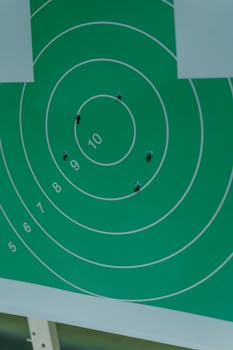
Precision Aim Practice for Shooter Players: Sharpen Your Skills Like a Pro
Everyone recognizes that quick reflexes are helpful, but consistent wins in shooters depend deeply on practicing the subtle skill of precision aim practice during every match.
As more competitive players invest hours into improving, the role of precision aim practice turns from option to necessity—refining muscle memory, accuracy, and confidence in every firefight.
Dive into the actionable techniques and examples below if you’re ready to turn every aim training session into an upgrade for your in-game performance, not just a daily routine.
Building Consistency Through Smart Precision Aim Drills
Planning your precision aim practice with the right drills delivers measurable, repeatable improvement, letting you see progress and stay motivated between matches.
Focusing each drill on a single purpose, such as correcting vertical flicks, eliminates distraction and makes every repetition count toward target accuracy.
Segment Your Training by Task Type
By dividing precision aim practice into flick shots, tracking, and target switch drills, you pinpoint weaknesses and tailor sessions for targeted skill development.
This segmentation helps players say, “Today I’ll refine close-range flicks for clutch pistol rounds,” giving every session a clear start and finish point.
Progress visible in drill-specific leaderboards or custom maps builds momentum, prompting players to review past scores and push for incremental improvement daily.
Adjust Drill Timing and Repetitions for Muscle Memory
Short, intense sets with intentional breaks let your brain encode movements, not just endurance. For instance, twenty-second bursts followed by thirty seconds rest prevents sloppy execution.
Players often comment, “I notice less fatigue and steadier crosshair movement after structured drills with timed rest intervals.” A kitchen timer or shot timer app can keep each round consistent.
Over time, repeating precision aim practice this structured way will engrain best habits much faster than endless, aimless target spamming ever could.
| Drill Focus | Session Length | Equipment Needed | Resulting Skill |
|---|---|---|---|
| Fast-Flick Shots | 10 min | Mouse, targets map | Quick elbow/wrist flicks consistency. Record “target connect” count for measurable improvement. |
| Moving-Target Tracking | 15 min | Tracking app, moving bot | Smooth horizontal/vertical tracking. Score by keeping laser on path 80%+ of each rep. |
| Crosshair Placement Runs | 10 min | Custom map, static targets | Optimal pre-aim. Record time to clear map, not just raw accuracy. |
| Reaction Flicks | 5 min | Random pop-up spawner | Reaction time at preset angles. Mark <150ms hits as success cases. |
| Close-Quarters Burst | 10 min | Live scrim or fast-paced map | Muscle memory under pressure. Track hit/miss during panic situations. |
Techniques for Tracking and Snap Accuracy in Clutch Moments
Applying these methods during your precision aim practice transforms nerves into steady focus, giving you the edge in last-second shootouts and fast retake scenarios.
Using visualizations before each aim snap primes your reflexes to distinguish head from torso instantly, rather than waiting for a perfect lineup during live play.
Develop Tracking in Real-Time Scrims
Training tracking aim means trailing opponents throughout chaotic duels—mirroring their lateral and vertical movement patterns to predict their speed, not just follow after.
Set up 3-vs-3 scrims where teammates call out “on your left, curve,” helping you connect crosshair movements to verbal cues and build real match awareness.
- Set manual sensitivity: Reduces over/under-shooting. Mark ideal dpi and cm/360 and stick with it for four weeks.
- Practice diagonal tracking: Move crosshair along ‘z’-shaped paths, simulating unpredictable movement for muscle flexibility and recall.
- Observe in-game strafe: Mimic opponent’s movement patterns in custom modes—helps anticipate their dodge habits and reduces jitter-aim.
- Enable damage feedback: Immediate audio cues signal tracking improvements or reveal snap misses—adjust aim in next session accordingly.
- Use micro-flick targets: Force yourself to hit quick, small-area targets mid-track, blending snap and traditional tracking for hybrid scenarios.
Every focused minute spent combining snap and tracking skills during precision aim practice leads to steadier aim during stressful clutch moments.
Evolving Snap Aim Transitions for Peak Performance
Sharpen snap aim by rotating target practice drills: alternate near and far, left and right targets, speaking aloud “wide left, tight right” as you go.
Using a metronome set to 65-75 bpm encourages rhythmic, even transitions—no rushed pulls, no slow hesitations, just mechanical stability under pressure.
- Trace sightlines before shooting: Outlines enemy approach for preemptive snap effectiveness.
- Repeat fast crosshair realignment exercises: Promotes instant recovery after overshooting—keep a personal best log of consecutive correct snaps.
- Vary target heights: Forces you to practice up-angle and down-angle flicks, preventing comfort-zone traps and boosting agility in mixed-cover maps.
- Use random target generators: Avoids anticipation patterns that make live play harder. Track performance uptick over five practice days.
- End each set with slow motion review: Watch replays, note wrist movement habits, and articulate corrections out loud to lock in lessons.
Finishing every session with five minutes of random snap transitions diversifies skill growth in your personal precision aim practice portfolio.
Sensitivity Settings and Mouse Technique Fine-Tuning
Tweaking your mouse setup boosts precision aim practice outcomes by matching device response to natural hand motion, not just trendy numbers seen online.
Personal sensitivity settings govern how much movement converts into pixel travel. Knowing your perfect spot means fewer missed shots when tension spikes.
Defining Your Sensitivity Deadzone
Every player’s hand has a comfort range where small shakes do not cause wild pointer jumps. This deadzone, when found through focused drills, anchors stable movement.
Try “windshield wiper” drills: sweep the mouse left and right across the pad, mapping out control limits. Log scores for fine-tuning your deadzone setup.
Precision aim practice here leads to steadier engagements and fewer over/under-shoots in high-stake moments.
Hand Placement and Grip Adjustments
Different grips—palm, claw, fingertip—impact micro-movement accuracy. Experiment a full session with each and log missed shots versus total attempts.
Compare, for example, palm grip’s stability on horizontal lines against fingertip grip’s responsiveness during short flick drills.
Finding and sticking to one grip for 7-10 days builds consistent muscle memory for your unique playstyle’s demands.
Routine Customization for Daily Precision Gains
Customizing each precision aim practice routine lets you target specific skills, keeping training fresh and maximizing improvement week by week.
Rotating between fast-paced and deliberate drills prevents boredom while reinforcing core skills in real match settings.
Mixing Static and Moving Target Drills
Alternating ten minutes of static targets with ten minutes chasing moving dots challenges your adaptability, simulating both defense and offense scenarios.
This approach ensures you address both slow, steady aim and rapid reaction modes: one for holding angles, the other for attacking sudden threats.
Over time, this variety leads to well-rounded aim stability—another hidden benefit of proper precision aim practice.
Setting Micro-Goals for Each Session
Define goals such as “land 3 more flick shots in one minute than yesterday,” not vague wishes to “improve.” Concrete targets guide attention and speed up skill gains.
Example statement: “Today, I’ll hit 10/12 mid-range pop targets within 30 seconds.” Mark each result to track trend lines.
Downloading incremental progress charts from training apps turns daily precision aim practice into a rewarding feedback loop.
Strategic Routines for Applying Aim Under Pressure
Recreating tense, chaotic match scenarios during precision aim practice builds instincts for landing shots while stressed—not just calmly aiming at static targets alone.
Players can simulate high-stakes rounds using alarm timers, loud music, or partner shoutouts, mimicking the unpredictability of real games.
Practicing Aim with Fatigue and Distractions
Intentionally train while mildly tired or with distractions, since head-to-head matches rarely occur in silent, ideal conditions.
For example, start your precision aim practice at the end of a session, using background noise or multitasking with voice chat to rehearse under real tension.
Log hit percentage drops, then create mini-goals to maintain accuracy despite any obstacle thrown your way—critical for peak tournament play.
Pacing Practice for Mental Endurance
Design each session to last as long as a standard match—fifteen to twenty minutes of full engagement trains not just aim but the focus to sustain it throughout a game.
Aim to increase session length by one to two minutes each week. Adjust difficulty up after hitting 90 percent accuracy over a full session.
Gradually building mental stamina during precision aim practice means greater resilience—as in, “I’m not fading in round three; I train longer and sharper than anyone else!”
Peer Feedback and Data Analysis for Rapid Gains
Sharing your precision aim practice sessions for peer review and collecting match statistics accelerates learning, identifying mistakes others spot in seconds that solo practice might miss.
Comparisons to ranked friends, team members, or personal video reviews reveal both strengths and hidden gaps with transparency and accountability.
Implementing Weekly Performance Reviews
Organize a Friday review, where you and a practice partner trade screen-recorded aim sessions. Offer direct observations, “You slowed your flick here” or “Steady tracking improved there.”
Encouraging specific, actionable feedback—not generic praise—keeps reviews focused on actual improvement, with the tracker logging progress every week.
Precision aim practice, when paired with scheduled reviews, makes it easier to catch lapses early and update training routines before habits set in.
Using Data for Micro-Adjustment
Export raw aim logs to simple spreadsheets: record time-to-hit, number-of-shots, target-switch-speed. Look for outliers or regressions immediately after each session.
Set rolling averages every five sessions to reveal emerging strengths or minor regressions. Example: “Last five days, missed upper-right corner by 15 percent more than average.”
Update drill focus after every data review. Tell yourself: “Next week—five extra minutes on upper-right targets, documented in my log book.”
The Takeaway: Strengthening Your Precision Aim One Day at a Time
Smart, varied precision aim practice unlocks steady hand-eye coordination, speed, and match performance—rooted in real examples, measured drills, and direct peer input each session.
Bringing accountability and micro-targeted goals to your daily precision aim practice transforms ordinary routines into powerful personal upgrades for in-game success.
Apply one new drill or feedback loop this week—then watch as every round feels smoother, sharper, and one step closer to championship-level confidence.