
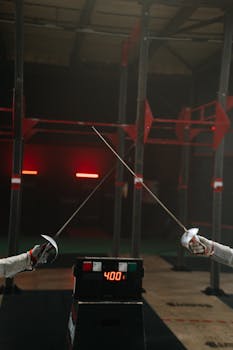
Timing Accuracy Skills for Strategic Actions: Strengthen Your Competitive Edge
Catching the perfect moment can mean the difference between success and defeat. In many arenas, developing timing accuracy skills is the silent engine behind great strategic actions.
Whether you’re gaming, managing projects, or navigating real-life challenges, expertly tuned timing accuracy skills create decisive advantages that set you apart. With the right methods, these skills are absolutely learnable.
You’ll soon see how timing accuracy skills influence not only reactions but every strategic action you take. Let’s explore practical approaches and examples you can use right away.
Pinpointing Critical Moments Improves Strategic Choices Instantly
Spotting the right second to act instantly improves your outcomes. Building timing accuracy skills begins with recognizing cues and interpreting them in real time.
Scenario-driven practice helps you fine-tune timing. For instance, a player monitors an opponent’s body language, tensing up as the countdown nears. They wait until the hand twitches, then react.
Reading Signals: Body Language and Environmental Triggers
To sharpen timing, study subtle pre-action signals. You’ll find clues in eye movement, posture shifts, or micro-expressions. Each one tells you when pressure is about to trigger action.
Imagine someone gripping the mouse more tightly before a move. You might note, “Their jaw clenched; now’s my chance to execute my play.” That phrase guides your timing accuracy skills.
During real-time events, environmental sounds—like a teammate’s keyboard click—can also cue you to act. Interpreting these signals feeds directly into accurate, strategic decisions.
Practicing with Deliberate Repetition
Create drills to build split-second recognition. For example, play quick-fire timing games with set cues. Each repetition strengthens your ability to recognize actionable moments without pause.
A coach might instruct, “Move only when you hear the third beep.” Deliberately failing early can help you find your threshold, then refine reaction speed for future strategic actions.
Use a timer to break scenarios into small intervals, noting how long it takes until you instinctively react at the best moment. Log your progress for steady improvement.
| Strategy | Cue Type | Timing Window | Immediate Next Step |
|---|---|---|---|
| Body Language Reading | Visual (posture/eyes) | Under 0.5 seconds | Act as soon as tension builds |
| Environmental Awareness | Auditory (sounds) | 1–2 seconds | Initiate your move on specific sound cues |
| Controlled Delay | Time-based (countdown) | 0.1–0.3 seconds | Hold back, execute on precise timing |
| Opposition Patterns | Behavior (habitual reactions) | Varies | React when pattern emerges |
| Pre-planned Triggers | Verbal (call-outs) | Instant | Follow plan, act immediately |
Sequencing Actions for Synced Execution Delivers Consistent Results
Synchronizing each step leads to predictable, consistent outcomes. Timing accuracy skills help you link actions smoothly, whether in teamwork or solo strategies.
Effective sequencing combines planning and real-time timing cues. See it on a sports field: “Pass, then sprint as the ball leaves their foot.” That script demonstrates how precise sequencing directs movement.
Creating Repeatable Step Sequences
Break complex moves into small, repeatable steps. Sequence each move with a timing cue. For example, say, “I launch, then count one-two before repositioning.” Repeat to build flow.
Map awareness development can also use sequencing. “Check left, then right, then mini-map—do this every four seconds,” becomes a rhythm that supports both timing and map awareness.
- Set a trigger point to start your action: Reduces indecision, makes your timing accuracy skills tangible. Practice with short time intervals or action phrases.
- Stagger team actions with countdown scripts: Prevents overlap, boosts consistency. Use verbal cues like “Go on three, not before.”
- Visualize the full sequence: Enhances memory. Picture each step paired to a visual or audio cue for quick recall under pressure.
- Record and analyze your actions: Cuts out drift. Use screen capture or notes to find where your timing wavers, then adjust the order or timing next round.
- Debrief after drills: Fixes errors. Review what went right or wrong with timing, then set small corrections for the next session.
Each tactic, when practiced, transforms loose actions into reliable, well-timed routines for competitive or real-world challenges.
Syncing With Teammates Under Pressure
Timing accuracy skills aren’t solo only. When collaborating, use short signals: “Mark, set… go.” This lets everyone act at the right moment, reducing confusion.
In a multiplayer scenario, one might call, “Stack at the door on five, breach together.” Each participant synchronizes on the number. This sharpens both group timing and trust.
- Establish a shared readiness phrase: Ensures everyone starts at zero. Use phrases like “Ready-Ready-Go!” for clarity.
- Agree on visual or audio signals: Avoids reliance on guesswork. Flash a light or ping in voice chat right before action.
- Assign a countdown leader: Keeps actions unified. One teammate counts down or cues an action, everyone else follows.
- Debrief immediately post-action: Fixes lapses. Discuss what threw off timing so the next attempt aligns better.
- Rotate cue roles: Helps everyone practice giving and following cues, which tightens overall team timing accuracy skills.
Using these synchronization techniques solidifies timing in both teams and individuals, raising reliability and outcome success rates dramatically.
Adopting Timing Drills Builds Reaction Speed and Tactical Foresight
Regular timing drills give you faster reflexes and train anticipation for complex actions. With timing accuracy skills, your decision speed and tactical planning improve in every scenario.
Training involves structured routines mimicking real situations, letting you layer reflex work with predictive thinking.
Incorporating Pattern Recognition Exercises
Timing drills often use flashing lights, beep cues, or call-out scripts to force rapid responses. Sharpen prediction by noting which signals match your next move—”If red, jump. If blue, duck.”
Pattern recognition skills support timing by revealing trends. For instance, an opponent dodges left every third exchange. Noticing and acting on this boosts both timing and tactical success instantly.
Keep a running log of which patterns you spot mid-game or mid-task, so your timing accuracy skills aren’t left to chance.
Proactive vs Reactive Timing Approaches in Real Scenarios
Proactive timing uses anticipation: you act just before a predictable event—like throwing a pass before a defender shifts. Reactive timing is waiting and pouncing instantly on a cue.
In resource planning skills for strategy games, you start building before resources hit zero, using proactive cues. This habit ensures you’re always a step ahead, not a step late.
Contrast: quick decision training for tactical games demands reactive timing—you wait for the enemy’s move, then counter immediately. Practicing both refines overall timing accuracy skills.
Applying Timing Accuracy Skills in Real-World Contexts Secures Tangible Advantages
Bringing timing accuracy skills into daily routines adds value beyond competition. Actions as simple as merging in traffic or nailing an interview response rely on well-honed timing.
Think of crossing a street at a busy intersection. You estimate when the walk sign will appear, then move with purpose as soon as it’s safe.
Daily Life Analogies for Strategic Timing
Pouring coffee without spilling mirrors timing in micro-actions: pour when the cup is steady, not when your hand shakes. Timing accuracy skills apply even here for a smoother morning.
Scheduling work sprints to match daily energy peaks is another. Start intense tasks just after a break, using the natural upturn for maximum productivity—a direct timing strategy.
Replying during meetings when attention is highest contrasts with interrupting at random moments. Saying, “May I add something now?” demonstrates exact timing for influence.
Professional Scenarios Where Timing Shifts Outcomes
In negotiations, the pause before responding can powerfully affect outcomes. A sales rep lets the client’s words hang, then answers after just the right fraction of silence.
Time project launches for early-week attention, not late Friday. “Let’s send this out Tuesday at 9 AM,” they say, benefiting from predictable email-checking rhythms.
Practice by noting, then emulating, timing behaviors of top performers in your field. Their scripts and moves become models for your timing accuracy skills evolution.
Building Timing Accuracy Skills Through Habitual Feedback and Micro-Adjustments
Feedback loops are crucial to refining timing accuracy skills. Each action is a chance to reflect, adjust, and improve for the next time.
After each attempt—whether gaming or presenting—note precisely what worked and what lagged. Small corrections, applied regularly, grow skills quickly.
Micro-Adjustment Strategies
Use instant playback features to review actions right after they occur. Pause, rewind, observe timing missteps, then note in a log exactly where you hesitated or jumped too soon.
Apply a two-step correction: first, change only the moment of action (move sooner or later); then, add a cue (like a word or mental image) so the adjustment sticks.
If you perform a task and the result is good, keep the timing sequence. If not, modify either the cue or timing window, never both at once, for clarity in what the adjustment changed.
Accountability Partners and Group Drills
Working with an accountability partner accelerates progress. After action, let a partner call out, “Bit too early,” or “Perfect timing that round.” Their feedback closes the learning loop fast.
In group settings, rotate who sets the cue and who responds. Each round builds awareness from different perspectives, tightening timing accuracy skills across the team.
Post-session, meet to discuss: “What made your timing feel sharp? What made it slip?” Specific feedback ensures each session improves next steps directly.
Conclusion: Give Your Actions Strategic Power With Timing Mastery
Developing timing accuracy skills changes more than just game performance. The ability to act at the right second boosts outcomes in both competitive and everyday life.
Tightly honed timing accuracy skills allow you to execute plans with confidence and predictability. Consistently applying drills and feedback makes mastery possible for anyone.
Make timing a daily habit, and every strategic action will become more effective, reliable, and impactful in every scenario you approach.